The Difference Between El Niño and La Niña
El Niño and La Niña are two climate patterns that start in the Pacific Ocean but can affect weather around the world.
For California homeowners, property managers, and restoration professionals, the difference matters because these patterns can influence rains, storm tracks, drought conditions, flooding risk, and how much preparation a property may need before the rainy season.
The simple difference is this: El Niño is the warm phase of a natural Pacific Ocean cycle, while La Niña is the cool phase. During El Niño, warmer-than-normal ocean water shifts east toward the Americas. During La Niña, stronger winds push warm water west, allowing cooler water to rise near South America. Scientists call the full cycle ENSO, which stands for El Niño-Southern Oscillation. El Niño, La Niña, and neutral conditions are all part of that same cycle.
El Niño vs. La Niña: The Real Difference
El Niño and La Niña are basically two opposite versions of the same climate pattern in the Pacific Ocean. Here’s the simple way to think about it.
This distinction is critical when evaluating whether asbestos was actually present.
In a normal year, winds called trade winds blow across the tropical Pacific from east to west. These winds push warm surface water toward Asia and Australia. As that warm water moves away from South America, colder water rises from deeper in the ocean near Peru and Ecuador.
That cold water is important because it carries nutrients. Those nutrients support fish populations, which is why the coast of Peru has historically been one of the richest fishing areas in the world. During El Niño, those trade winds weaken.
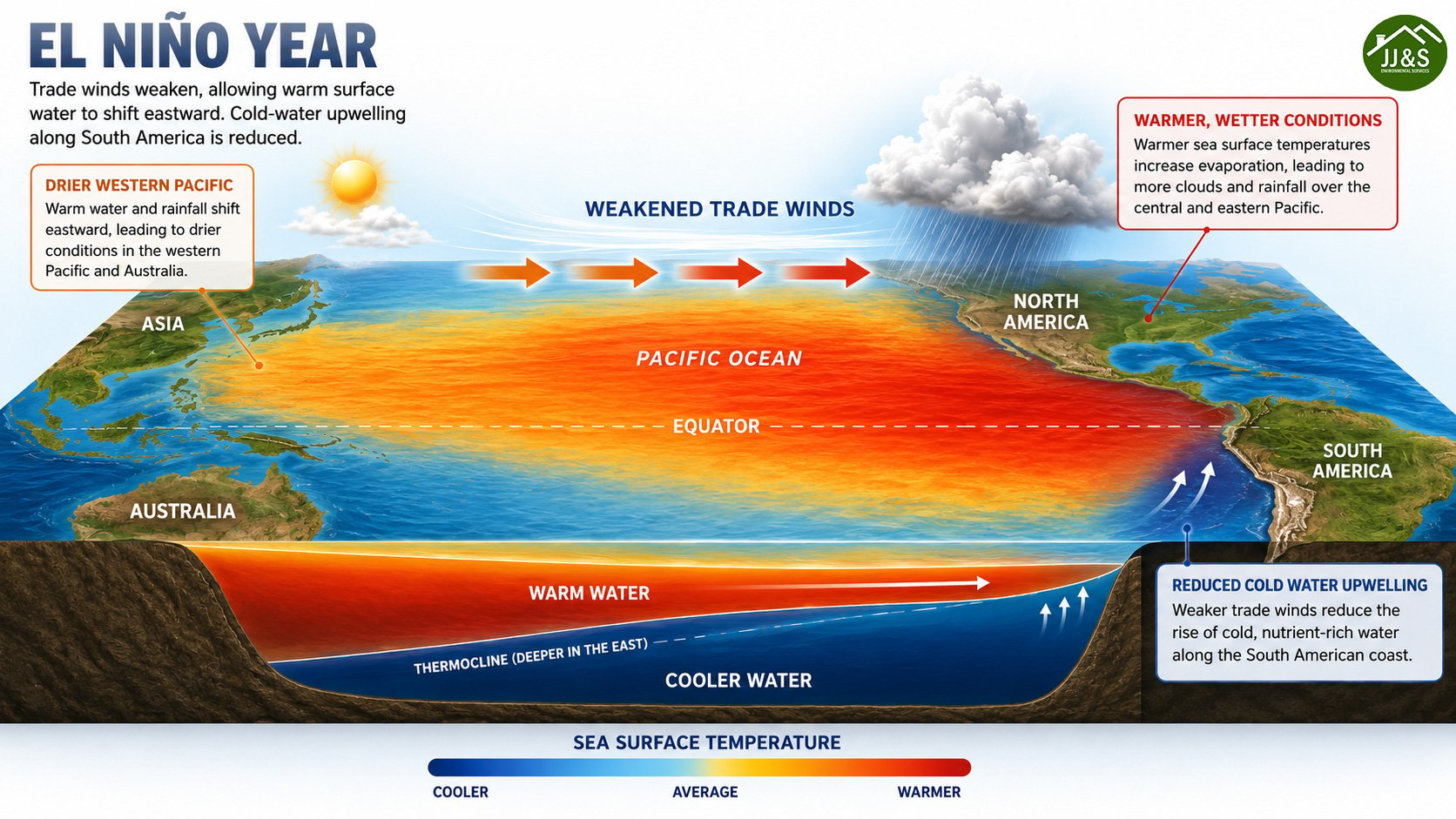
When that happens, the warm water that usually stays closer to Asia and Australia starts moving back toward the Americas. This changes ocean temperatures, but it also changes the atmosphere above the ocean. Since warm water helps create clouds and rain, rainfall patterns can shift across different parts of the world. During La Niña, the opposite happens.
The trade winds become stronger than normal. They push even more warm water toward Asia and Australia, while colder water rises more strongly near South America. This creates a cooler pattern in the central and eastern Pacific.
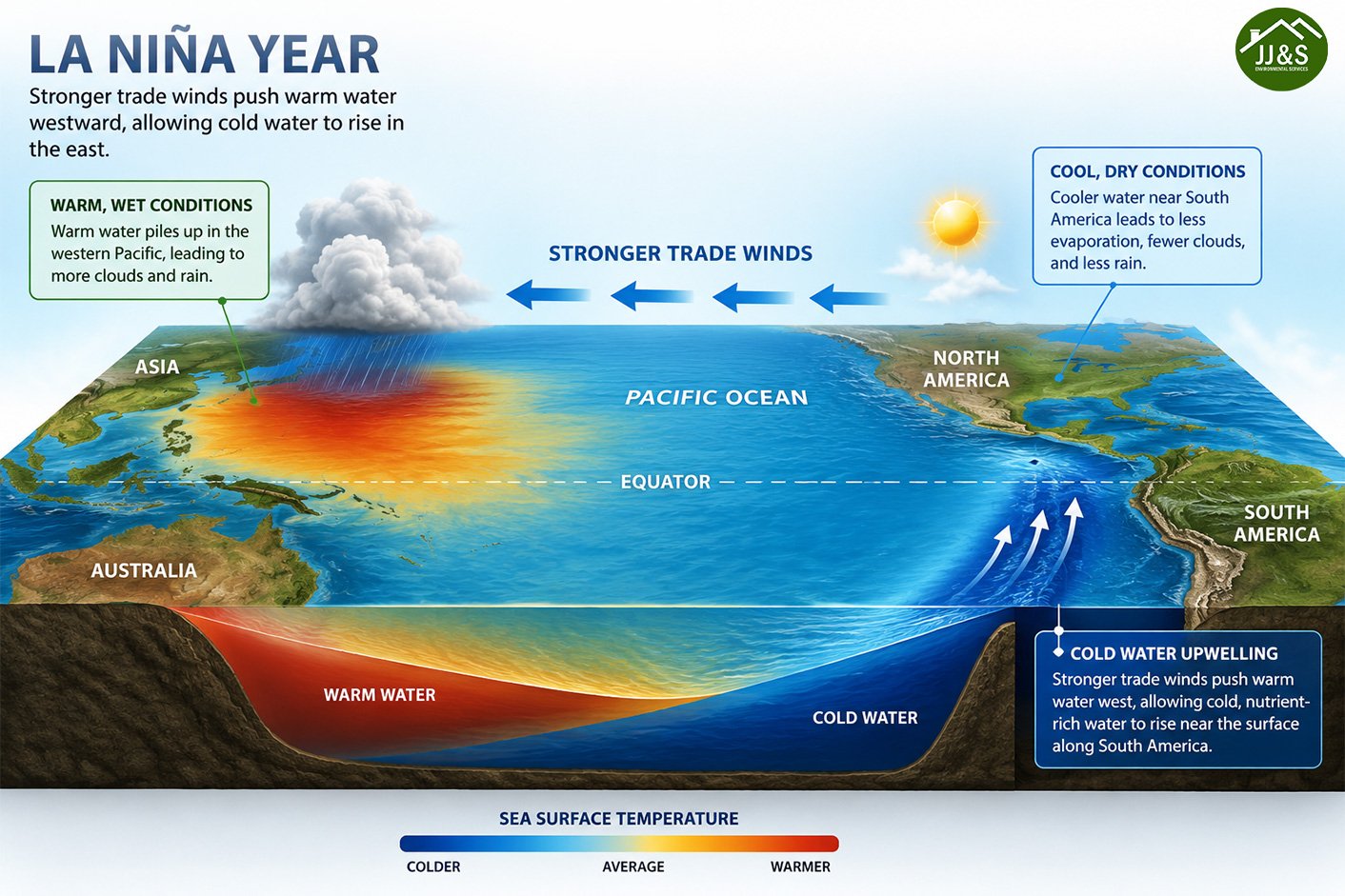
The easiest way to remember it is:
-
El Niño means warmer-than-normal water in the central and eastern Pacific.
-
La Niña means cooler-than-normal water in the central and eastern Pacific.
- Normal year: regular trade winds, warm water in the west, cold water in the east.
So, What Is El Niño?
El Niño happens when surface water in parts of the tropical Pacific becomes warmer than normal for an extended period. Warmer ocean water increases evaporation, which can shift where storms and rainfall develop. When that happens on a large scale, the effects can ripple across the globe.
El Niño was first noticed by fishermen along the coast of Peru and Ecuador. Every few years, they saw the cold ocean water they depended on suddenly turn warm. Fish disappeared, catches collapsed, and then conditions eventually returned to normal. Because the warm water often appeared around December, near Christmas, fishermen called it “El Niño de Navidad,” meaning “The Christ Child.” Over time, the name was shortened to El Niño.
Today, El Niño is understood as much more than a local fishing problem. It is one of the most important natural climate patterns on Earth because it can affect rainfall, drought, storms, fisheries, ecosystems, and global temperatures.
What Is La Niña?
La Niña is the opposite process of El Niño: Instead of unusually warm water in the central and eastern Pacific, La Niña is associated with cooler-than-normal water in that region. It usually happens when trade winds strengthen and push even more warm water toward the western Pacific.
That stronger wind pattern allows more cold water to rise near South America. Just like El Niño, La Niña can shift rainfall and temperature patterns around the world.
In some regions, La Niña can bring wetter conditions. In others, it can increase drought risk. That is why it is important not to describe La Niña as simply “good” or “bad.” Its impact depends on where you are. For California, La Niña is often associated with a storm track that stays farther north. That can mean drier conditions for Southern California, though every year is different.
What Does ENSO Mean?
ENSO stands for El Niño-Southern Oscillation.
It is the scientific name for the full climate cycle that includes El Niño, La Niña, and neutral conditions. Climate.gov describes ENSO as one of the most important climate phenomena on Earth because it can change global atmospheric circulation.
There are three basic ENSO phases:
-
-
El Niño: warmer-than-normal ocean water in the central and eastern tropical Pacific.
-
La Niña: cooler-than-normal ocean water in the central and eastern tropical Pacific
-
Neutral: ocean and atmospheric conditions are closer to average.
-
Most people search for “El Niño” or “La Niña,” but ENSO is the larger pattern behind both terms.
Can El Niño Affect The Weather?
El Niño can shift weather patterns because warm ocean water changes where air rises, clouds form, and rain falls.
In many El Niño years, parts of the eastern Pacific and the southern United States can become wetter than normal. Australia and Indonesia often experience drier conditions. El Niño can also contribute to warmer global average temperatures, fewer Atlantic hurricanes, more Pacific hurricane activity, changes in fish populations, and coral bleaching in tropical reefs.
For California, El Niño often gets attention because it can push the winter storm track farther south. When that happens, storms that might have stayed closer to the Pacific Northwest can move toward California instead.
That does not mean every El Niño brings major rain to California. It means the odds can shift.
.png?width=952&height=238&name=Beige%20Aesthetic%20Business%20Banner%20Email%20Header%20(600%20x%20150%20px).png)
How La Niña Can Affect Weather
La Niña often produces a different pattern because the tropical Pacific is cooler in the central and eastern regions, the atmosphere responds differently. In many La Niña years, rainfall shifts toward the western Pacific, and the jet stream pattern over North America can change.
For California, La Niña often leans drier, especially in Southern California. The Pacific Northwest may see more storm activity, while Southern California may receive less consistent winter rain. However, La Niña does not guarantee drought in California, just as El Niño does not guarantee flooding. These patterns influence probabilities, not exact outcomes.

What Does El Niño Mean for California?
California sits in a region where winter weather depends heavily on the jet stream, atmospheric rivers, ocean temperatures, and storm-track patterns.
El Niño can bring more rain to California, but it does not always happen. The 1997–98 El Niño brought major flooding and storm impacts to parts of California. But the 2015–16 El Niño, often called the “Godzilla El Niño,” did not bring the historic rainfall many expected in Los Angeles.
Why California Homeowners Should Pay Attention?
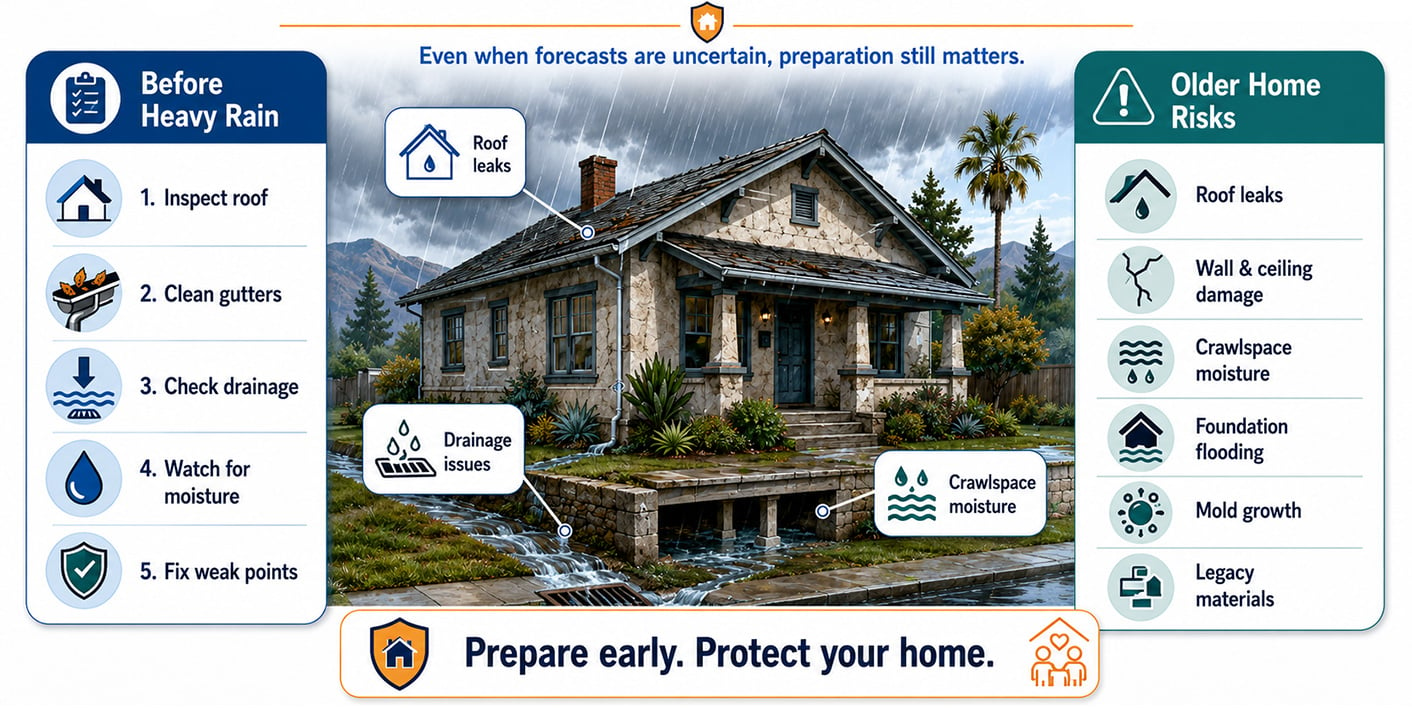
Even when forecasts are uncertain, preparation still matters. For homeowners, El Niño and La Niña are useful because they help people think ahead. If there is a higher chance of winter storms, homeowners can inspect roofs, clean gutters, check drainage, look for moisture-prone areas, and identify potential vulnerabilities before heavy rain arrives.
This is especially important for older California homes. Many homes built before modern building-material restrictions may contain legacy materials that require care during repairs, demolition, or restoration. Water damage in an older home is not always just a water issue. It can expose or disturb materials that may need proper testing before work begins.
That matters for:
-
Roof leaks
-
Wall and ceiling damage
-
Crawlspace moisture
-
Flooding around foundations
-
Mold growth after water intrusion
-
Repairs involving older drywall, plaster, flooring, or insulation
-
Demolition after storm damage
The safest approach is to avoid rushing into demolition or repairs when older building materials may be involved.
Does El Niño Always Mean More Rain?
No. El Niño does not always mean more rain.
This is one of the most important things to understand. El Niño changes the odds, but it does not control every part of the weather system. California’s winter depends on several factors, including the strength of the El Niño, where the warmest ocean water is located, how the jet stream behaves, atmospheric river activity, and other short-term weather patterns.
That is why one strong El Niño can bring major storms while another strong El Niño may bring less rain than expected.
For property owners, this means preparation should not be based on panic. It should be based on readiness.
What Should Homeowners Do Before the Rainy Season?
Whether the forecast leans toward El Niño, La Niña, or neutral conditions, California homeowners can reduce risk by preparing early.
Start with the basics:
Inspect the roof for missing shingles, damaged flashing, or signs of previous leaks. Clean gutters and downspouts so water can move away from the home. Check grading around the foundation to make sure water does not drain toward the structure. Look in attics, crawlspaces, closets, and wall corners for early signs of moisture. Make sure windows, doors, and exterior openings are properly sealed.
For older homes, preparation should go one step further. Before cutting, removing, or demolishing water-damaged materials, consider whether testing is needed. Homes built before 1980 may contain materials that require proper handling, especially if repairs involve ceilings, walls, flooring, pipe insulation, or textured coatings.
The goal is not to create fear. The goal is to avoid turning a water-damage repair into a bigger safety, compliance, or insurance issue.
Final Takeaway
El Niño and La Niña are opposite phases of the same Pacific climate cycle.
El Niño brings warmer-than-normal water to the central and eastern tropical Pacific. La Niña brings cooler-than-normal water to that region. These changes can shift weather patterns around the world, including California’s winter storm track.
For California, El Niño can increase the chance of a wetter winter, while La Niña often leads to drier winters in Southern California. But neither pattern guarantees a specific outcome.
The best approach is simple: understand the forecast, avoid the hype, and prepare your property before winter conditions arrive.
For older California homes, that preparation should include more than roof and gutter checks. If water damage affects older building materials, proper testing and professional guidance can help protect the home, the people inside it, and the repair process.
JJ&S Environmental Services provides the inspection, documentation, and support needed to keep projects compliant and on track.